
How to Prune Fruit Trees: Pro Tips for Backyard Orchards
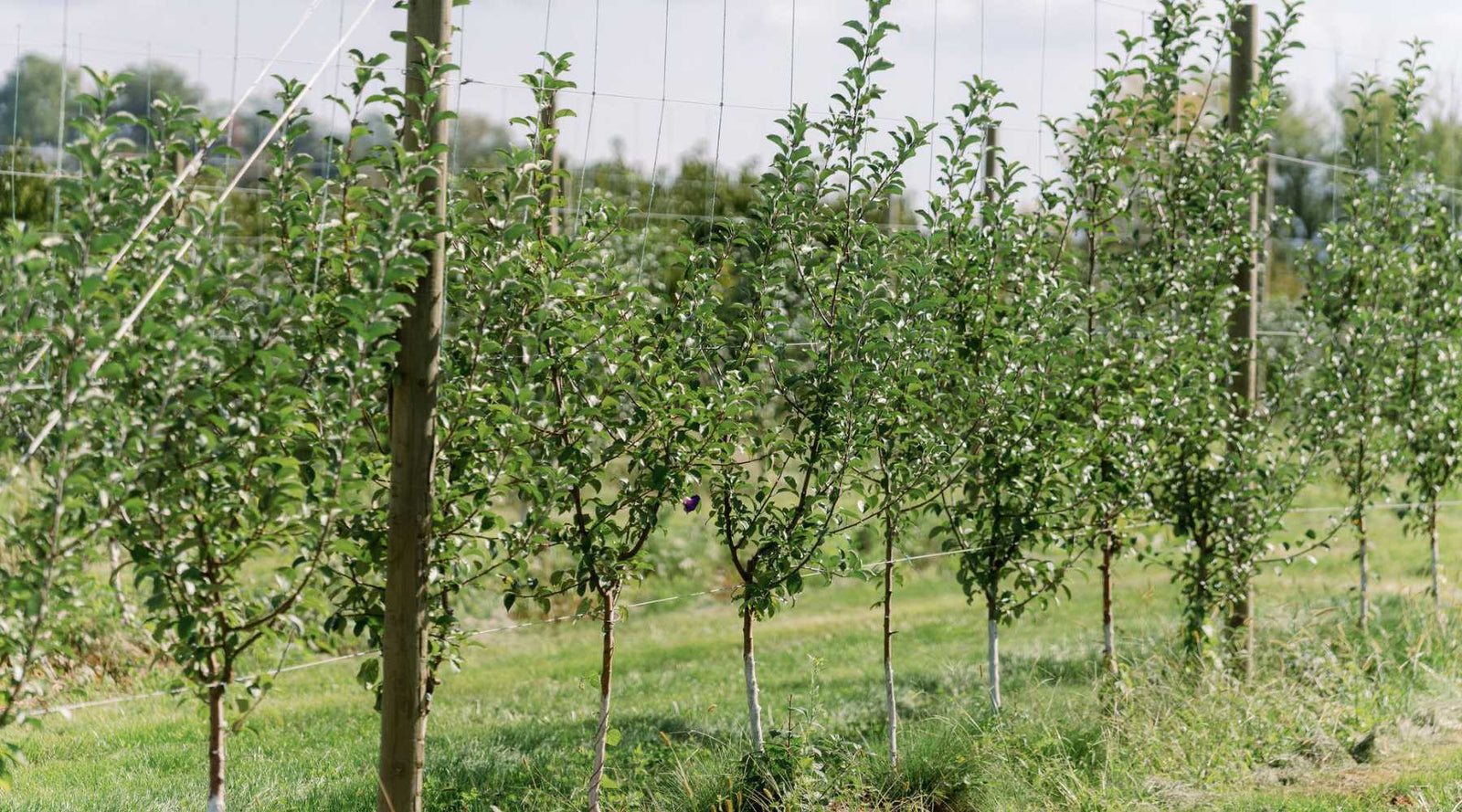

How to Prune Fruit Trees: Expert Tips for Your Home Orchard
Feeling intimidated by all there is to learn about pruning fruit trees? Ed Donnelly of Bob Wells Nursery at Sorelle Farm provides easy-to-follow, expert-backed growing tips to help homesteaders and small-scale growers prune fruit trees.
Winter is the best time to prune many trees, so it’s time to start planning your pruning sessions. We broke it down by tree type, with notes on different growing zones.
Properly pruned trees are:
-
Healthier
-
Higher yielding
-
Longer-living
Get the confidence boost you need from an experienced fruit tree grower. Keep reading to learn everything you need to know about pruning. We’ll discuss why it’s important, the basic tools you need, and long-term maintenance.
Permaculture Guide to Fruit & Nut Trees
Pruning with Purpose: Why Every Cut Matters
The key to pruning is striking a balance between keeping your tree healthy and maximizing productivity and yield. This is the goal of every commercial orchard. We’ll help you scale these principles to your level, whether you have a few trees or a small backyard orchard.
Pruning shouldn’t harm your trees; it should guide them into proper form and performance. Or as Ed likes to say, “Pruning is guidance, not punishment.”
Ed says he’s constantly asked questions like these from growers:
-
“Do I have to plant my tree in full sun?”
-
“How many gallons of water does my tree need weekly?”
-
“When should I prune my trees?”
There are many techniques for growing, watering, and pruning fruit trees, but one thing remains true. You must monitor your orchard and respond to the trees’ needs in real time. Ed informs customers that no one knows their trees better than they do. If you suspect pests, develop a plan to spray during dormancy to suffocate pest eggs. If you confirm a disease, prune the affected areas immediately to allow your tree to recover.

The Basics: Tools, Timing, and Tree Anatomy
Must-Have Tools for Backyard Growers
Hands down, the most essential tool you need in your toolbelt is a pair of high-quality pruning shears. We love these from Metallo, which are:
-
Razor-sharp
-
Ergonomic
-
Lightweight
-
Versatile
-
Easy to clean and maintain
While not required, we recommend having these few basic tools on hand:
-
Gloves
-
An orchard saw
-
Sterilization tools
-
Ed recommends investing in a pruning extension tool to avoid having to climb a ladder.
Bootstrap tip: Keep tools and workspaces clean to prevent the spread of disease and ensure they are in good working order. Always cut at a 45° angle.
Timing: When to Prune Each Fruit Tree Type
|
When |
Why |
What types of trees |
|
Late winter/late spring |
|
|
|
Summer/after harvest |
|
|
Before dormant pruning, confirm that it is, in fact, dormant. Perform a scratch test on a plump, healthy branch. The inner layer of the twig should be moist and green, meaning it’s alive, just sleeping.

Understand the Tree’s Structure
Before we get into how to prune a tree, it’s important to understand the various parts of the canopy, or growth that happens above ground. We’ll focus here, as this is where pruning occurs.
|
Element |
What it is |
Purpose for pruning |
|
Scaffold branches |
Main limbs that form the structure of the tree. |
Keep these strong to carry heavy fruit loads. |
|
Spurs |
Short, stubby branches (two years or older) that produce fruit. |
Preserve these on apples, pears, plums, and cherries. |
|
Water sprouts and suckers |
Fast-growing, unproductive shoots. Suckers come from the base or roots, water sprouts grow vertically from branches. |
Remove these immediately, as they steal energy and lower production. |
|
Branch collar |
The swollen spot where a branch meets the trunk. |
Never cut into this area—it holds the tree's healing cells. |
Vigorous stone fruit trees, such as peaches, require an open center. This allows sunlight to penetrate the canopy, promoting fruit ripening. The open center also allows fresh air to circulate through, reducing the risk of pest and disease pressure. If fruit doesn’t have fresh air or space to ripen, the fruit will be:
-
Misshapen
-
Underdeveloped
-
Rotten
Apples and pears perform best with a modified center or central leader with scaffolds. This structure allows the tree to grow upright naturally, creating distinct layers of ripening fruit. Identify a strong trunk when trees are young to serve as your central leader.

How the Pros Prune a Tree
Start with the 3 D's – Dead, Damaged, Diseased
This step is non-negotiable. Dead, damaged, or diseased branches and limbs can cause tree damage, stunted growth, stress, and even death. Using a 45° angle cut with the cut edge facing the ground, remove all of the 3D branches.
The point of origin is the branch collar, the rugged spot where the branch connects to the trunk. You may notice bumpy, swollen cells in this area. These bumps are healing cells. It’s crucial that you leave the collar intact so the tree can heal itself.
Remove Problem Branches
Look at your tree before pruning and imagine it full of ripening fruits. The purpose of pruning is to ensure your fruit has space to grow, receives ample sunlight, and has healthy air circulation. Perform these tasks during pruning sessions.
-
Remove spindly, funky, and crossed branches.
-
Take out the suckers and water sprouts. These are poorly attached, consume precious resources, and typically don’t produce results.
-
Cut so that young trees end up in a V-shape, opening up the center. This method allows you to clearly visualize the tree's future growth and identify the main leaders as they take hold. Otherwise, select a central leader.

Shape for Structure and Yield
Beginners often believe that the fuller a tree is with branches, the more fruit it will yield. In fact, the more efficiently you prune your branches, the healthier they will be, and yields will be plentiful.
A “thinning cut” is when you remove an entire branch at its origin to significantly open up the canopy. Remember, the point of origin is the branch collar, the rugged spot where the branch connects to the trunk. You must leave the collar intact so the tree can heal itself.
An open canopy provides the tree:
-
Ample sunlight
-
Healthy airflow
-
Visualization for monitoring disease and pests
-
Growth stimulation after a thinning cut
Choose strong, healthy branches for the remaining scaffolding. They need to be robust enough to carry the weight of the fruit. Note that you may need to use heavy loppers or a pruning saw to complete this task cleanly and safely.

Manage Overgrown or Neglected Trees
If you acquire neglected or overgrown trees with newly purchased land, you can save them! Overgrown tree restoration takes years of patience and strategic pruning. Slow and steady wins the race in this situation. Make changes slowly and intentionally to gradually improve the tree’s condition.
Avoid making quick, drastic changes all at once. Penn State Extension dives deeper into this specific type of tree TLC in Home Gardening: Pruning to Renovate Old Fruit Trees. You should never remove more than 25-30% of a tree's branches in a single year.
Removing more:
-
Causes stress
-
Limits photosynthetic capacity
-
Increases susceptibility to pests and diseases
Leaving the tree vulnerable to shock and injury will prevent proper healing and future production. Plant young trees in other areas and practice patience with your older, neglected trees over the seasons.
Bootstrap tip: Be prepared with appropriate tools for the job. Secure large pruners or an orchard saw to help remove thick, gnarly, and high-up branches.
Feeding Your Fruit Trees and Your Soil
Focus on soil health during the trees’ healing process. Ed’s number one piece of advice is that if you’re considering adding trees to your property, start adding organic matter today to prepare. Beginner's Guide to Soil Fertility outlines simple ways to boost your garden's health. Growing in clayey soil? This article is for you.
Support the soil and your tree with fertilization based on soil tests. Apply a granular feed before spring buds break to support spring growth. Feed again in late spring or early summer to help with ongoing growth and fruit production. Avoid feeding late in the year, as this may encourage growth that could be damaged by the first frost.
Ed’s Expert Tips For Fruit Trees
-
Prune tropical fruit, citrus, and avocado trees right after harvest. This gives them time to develop new growth and next year’s buds.
-
Apricots and cherries are highly susceptible to disease. Only prune these during dry spells in the growing season.
-
The more you do, the more you learn! Keep up with pruning to avoid becoming overwhelmed. The task is more daunting when it has been ignored for many years.
Ed states that pruning should not be the same every year. Listen to the tree and let its behavior last season guide your winter pruning. Think of pruning as a feedback loop rather than a fixed routine. Growth and fruiting will become more balanced over time with this technique.
-
If a tree carried a heavy crop but the fruit stayed small: a harder winter prune helps push stronger vegetative growth and improve future fruit size.
-
If fruiting was light but the tree produced lots of long, vigorous shoots: prune more conservatively and focus on thinning rather than heading.
-
Branch angle matters more than the number of branches you leave.
-
- Narrow, upright branches break more easily under fruit load. They’ll also compete with the central leader and encourage excessive vertical growth.
- When you see tight-angle branches, remove or redirect them early, even if they look healthy. This directs the tree’s energy into wider, stronger limbs that can support fruit. This method allows the tree to maintain good structure for years.
- Narrow, upright branches break more easily under fruit load. They’ll also compete with the central leader and encourage excessive vertical growth.
Special Cases: Different Fruit Tree Varieties
Apples & Pears (Pome Fruits)
Ideal timing: Late winter to very early spring, before new growth
Envision a strong, stable pyramid shape with a central leader when pruning pome fruit trees. Angle your primary scaffolds at 45°. Prune crossed or wild 1-year-old branches during the summer months to ensure adequate light reaches the fruit. Save pinpointed shaping for winter dormancy.
A common mistake when pruning pome fruit trees is removing old wood that contains this season’s fruit. Pomes fruit on two-year-old wood.
1-year-old wood or last year’s growth: Branches are thin and reddish, unlike the light brown or gray of the mature branches.
2-year-old wood or fruiting wood: Lighter and more textured than first-year wood, and may feature clusters of spurs. Flowers will emerge from these clusters.
Peaches, Plums, Nectarines (Stone Fruits)
Ideal timing: Late winter to early spring (two weeks after petal fall, before buds break)
If you’re growing peaches, be prepared to prune from year one. Use an open-center pruning model with 3-5 primary branches for best success. Select branches that naturally grow in different directions and aren’t competing with each other. These branches will remain the primary leaders for the life of the tree. Fruits will ripen on last year’s wood, which is easy to identify.
Thin your tree after the “June drop,” when the tree drops tiny fruits. Collect the culled fruit into 1020 trays or buckets before adding them to a compost pile to prevent rodents from rummaging around your orchard. Remove about half of the small fruits to ensure the remaining fruits receive the available resources and ripen. Many beginners struggle with the culling step, but trust that it’s in their best interest. Improving the tree structure and airflow will significantly improve the size and quality of harvestable fruit.
Bootstrap pro tip: Late-winter pruning encourages new growth. This year’s new wood becomes next year’s fruiting wood.
Bob Wells Nursery Fruit Tree 101 - How do I prune my fruit tree?
Lemons, Limes, Oranges (Citrus)
Ideal timing: Early spring, just before the “spring flush” of new growth
Who wouldn’t love a fresh, homegrown citrus slice in their glass of water? It’s more of a challenge, especially in northern regions, but proper tree pruning can help you achieve it.
Some growers use a heading cut for citrus. This method involves cutting just above a healthy node on a long branch. The cut encourages new growth on both sides. The branch will produce multiple new productive branches. There will be ample space between them for sunlight penetration and ripening fruit.
Below, we break down a few key differences between dwarf and full-size citrus trees to help you decide which is right for you.
|
Characteristic |
Dwarf Trees |
Full-size Trees |
|
Time to bear fruit |
About 1-3 years |
About 3-6 years |
|
Container options |
Suitable for grow bags or containers. Bring them inside for the winter. |
Trees planted in the ground will get you the best results. |
|
Mature height |
6-10 feet, smaller in containers |
15-25+ feet |
|
Popular varieties |
-‘Improved Meyer Lemon’ -Calamansi-hybrid (mandarin orange and kumquat) -’Bearss’ Persian lime |
-’Moro’ blood oranges -’Rio Red’ grapefruits -’Gold Nugget’ mandarins |
Avoid These Common Mistakes
Over-Pruning
Pruning too much is a common beginner mistake. It’s easy to get carried away with pruners in hand. Once you have the confidence of a seasoned orchardist, you’ll know exactly what to look for, remove, and leave as is.
Pruning shock occurs when a tree loses too many limbs and branches, or undergoes flush cuts. It’s a physiological stress that can cause:
-
Wilting
-
Risk of disease
-
Water sprouts
-
Yellowing
-
In extreme cases, death
Avoid removing more than 20%-30% of the canopy to ensure the plant can recover from pruning. Here are some other tips to avoid pruning shock:
-
Get the timing right for the type and variety of trees
-
Focus on root recovery by watering and mulching after pruning
-
Take potted and container trees into a shaded area to recover
-
Avoid making direct cuts in the branch collar
Making Flush Cuts
At the intersection of a tree trunk and a limb, there are bumpy tissues. Think of these bumps as the tree’s defense against injury. Flush cuts remove the branch collar, leaving the tree vulnerable and unable to heal.
After you make a flush cut:
-
Tree defenses are down
-
May lead to shock, stress, and stunted or poor growth
-
Fungi and bacteria may easily enter
-
Cutting into the branch collar leaves a large, unsightly hole in the trunk
Ignoring Timing Windows
We cannot stress the importance of pruning timing enough. Be aware of the specifications that each tree type and variety has before adding it to your property. When you prune each year may depend on your goals.
When you prune is most crucial if you need to do a major cleanup, remove dead or diseased limbs, or drastically reshape the tree. If you need advice or are unsure of the proper timing, contact a local arborist or the Arbor Day Foundation.
Getting Overzealous
Ed says one of the most common mistakes he sees among budding orchardists is overzealous planning. We’ve all heard that the best time to plant an apple tree was ten years ago, so people are anxious to get started. However, biting off more than you can chew will only cause your trees to suffer.
Here’s what you can do instead:
-
Break up tasks into management timeframes. There’s no need to prune 50 trees in one day when you have the entire dormancy period.
-
Set realistic goals.
-
Contact the experts with questions or concerns. Use their experience and grow smarter, not harder.
Failing to Sterilize Tools Between Trees
Clean tools and sanitized work areas significantly reduce the transmission of disease. This is a non-negotiable step. Get in the habit of cleaning tools after each use so you never have to question their safety. Also, if you suspect disease in any area of your orchard, disinfect tools between trees and change your gloves.
Bringing It All Together: The Pruning Routine That Works
The more you prune, the more confident you will become and the more you’ll learn. Add pruning to your regular property maintenance list, or schedule it alongside fall garden cleanup. Here’s how Ed Donnelly from Bob Wells Nursery at Sorelli Farm doesn’t miss a thing.
Dormancy begins around the first fall frost and lasts until the last spring frost. The safe pruning timeframe increases the farther north you are. If you are growing large quantities of different varieties of the same fruit type for market sales, Ed suggests dividing the varieties into early-, mid-, and late-season producers to extend the season. Commercial operations break down the pruning task by variety, and you should too.
Ed directs customers to Dave Wilson Nursery’s website for more in-depth information on fruit tree pruning.
Here are his key expert tips:
-
Small trees are easier to manage and harvest, and yield more fruit. Keep them between 6 and 8 feet for best results.
-
Summer prune vigorous trees.
-
Focus on health and shape during winter pruning, when visibility is better.
-
Work from the outside in for a staged approach. Don’t stress yourself out to get it all done in one session!
-
Avoid cutting the collar to promote healing.
FAQs For How to Prune Fruit Trees
When is the best time to prune fruit trees?
Compare winter vs. summer pruning, plus timing by variety.
Can you prune fruit trees too much?
Yes, excessive pruning can lead to:
-
Pruning shock
-
Reduced productivity
-
Disease
-
Long-term stunted growth
-
Death
Should I prune young fruit trees differently?
Young trees need you to establish a trained shape and healthy canopy so they can produce abundantly. Ed suggests removing the fruits in year one to achieve a more productive year two. Older trees are pruned more for health, aesthetics, and disease prevention.
Should I prune my bareroot trees?
If you receive bare-root trees in the mail and they need a few days to recover from their travels, place them in a grow bag with damp media, such as coco coir mixed with soil. Allow them to rejuvenate and rehydrate before transplanting. This will help prevent transplant shock when it’s time to plant them.
Some will need pruning after you plant them, or a heading cut if they are too tall for the roots to support.
Learn more about how to work with bareroot plants in How to Plant Bare Root Plants - Essential Tips from Real Farmers.
What tools do I need to prune a fruit tree?
Sharp, clean pruning shears, gloves, and an optional orchard saw for large branches.
How can I tell which branches will bear fruit?
This year’s fruit comes from last year’s new growth, so it will be older and lighter in color. Apples, pears, plums, and cherries are spur-bearing. Spurs are two years or older and look like little stubs on the branches. Tip-bearers like peaches, nectarines, and apricots develop on the tips of last year’s plump shoots.
Is summer pruning bad for fruit trees?
Pruning timing depends on the fruit tree's type and variety, as well as the pruning goals. Focus on light penetration and light removal of spindly branches in the summer. Save major reshaping for winter dormancy.
How do I fix a badly pruned tree?
Hire a professional to advise on the best next steps. Or, perform light pruning each season as the tree fills in, making only minor, cosmetic cuts. Continue training and pruning each year until it reaches the desired shape. Continue to mulch and water properly. You’ll typically get more fruit to harvest by saving a mature tree rather than starting over with a new, young tree. Patience is key.
Will pruning affect this year’s fruit harvest?
No, pruning improves next year’s harvest.
Resources:
4 Basic Pruning Cuts, Demonstrated & Explained! https://www.youtube.com/watch?v=YLYolsTjmKs