
Growing Geraniums for Market Success
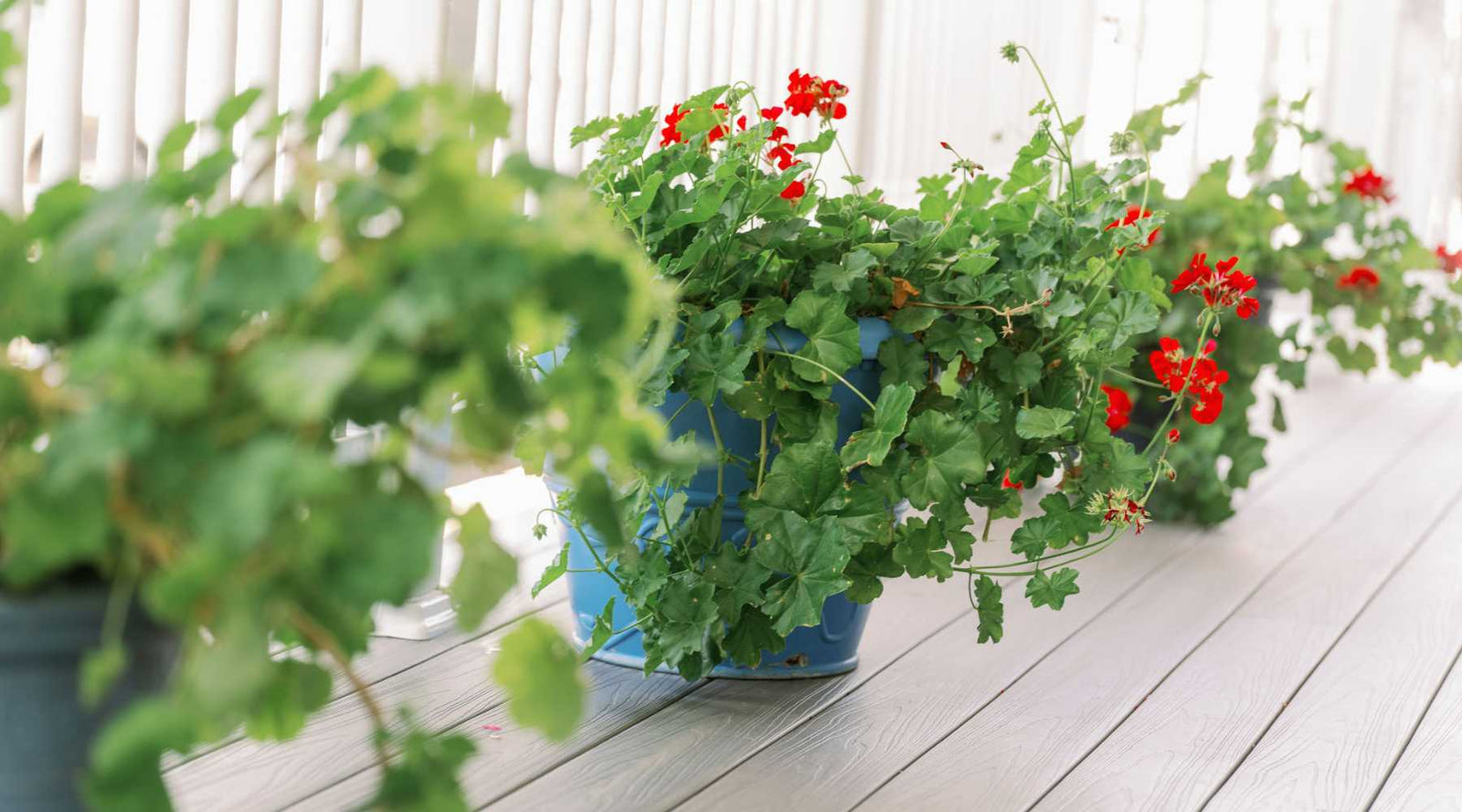

Growing Geraniums: A Market Grower's Guide
Geraniums are a popular and profitable spring bedding and potted plant crop. Their wide range of styles and colors makes them extremely versatile and sought after among home gardeners. These flowers are highly reliable and can be grown commercially from cuttings rather than seeds.
If you’re looking for high-quality and efficient market sales this spring, master growing geraniums. Growing geraniums from cuttings is the method most commercial growers use. This article focuses on growing geraniums from cuttings and on when to plant them for Mother's Day and other spring events. Cuttings ensure uniform, high-quality plants, ready in time for spring sales, maximizing your profit.
Why Geraniums Are a Smart Spring Crop
Geraniums Sell Well
Geraniums are familiar to customers and fairly easy to grow. They may even cause feelings of nostalgia. Customers perceive these as high-quality gifts and will pay top dollar for them.
If planned right, geraniums can be ready for sales around spring events like Mother’s Day. Be the first to market with premium varieties, larger pot sizes, and beautiful gift options. This will set you apart from big box stores.

Geraniums are Easy to Time to Profit Windows
Peak geranium sales will be mid-April through Mother's Day in early May. Work backward from the supplier's maturity date to ensure blooms are ready during your peak sales window. If you’re taking cuttings from plants you already have, use the average time it takes for cuttings to be ready to sell as plants. Experiment with the timing until you get it right.
If you propagate too early, your plants will bloom before your sale. If you propagate too late, your plants won’t have blooms, which may negatively affect sales. Earlier is the better option because you can always deadhead your plants to encourage more blooms.
We’ve included tips for delaying blooms in the How to Time Blooms for Market Day section.

Propagation: Starting Geraniums the Professional Way
Why Start from Cuttings?
-
Cuttings are quicker to “take” and mature
-
They produce stronger plants than seeds
-
Uniformity is ensured with this method
Professional growers use cuttings for 90%+ of production. You can use this method to grow your business, too.

How to Take and Root Geranium Cuttings
Use clean, sharp pruners to make cuts, so your plant heals quickly. When holding your geranium, each stem is a potential cut.
-
Make angled cuts above a growing node (the thicker part of the stem) where the leaves protrude. Leave the top leaves intact.
-
Remove lower leaves and stipules (white, papery spots), and flowering buds. Stipules protect growth points.
-
Trim the stem to the desired length.
-
Repeat this for each stem.
-
Place the stems in water and allow them to root. Place the glass in a warm spot out of direct sunlight.
You’ll see roots begin to grow about two weeks later. You can also place cuttings directly into potting soil after dipping them in coconut water or rooting hormone. To learn more about rooting options, be sure to read our article How to Propagate Roses from Cuttings.
Monitor the root growth every week or so and up-pot as needed. You may be surprised at just how quickly this process goes.

Rooting Setup & Environment
Set up your workstation for success. The following must-have products will help you succeed:
-
Humidity domes to maintain proper humidity
-
Heat mats to maintain ideal root temperatures (70°F-75°F (21°C-24°C))
-
Spray bottles for misting. Misting prevents oversaturation of the soil. Keep the soil moist, but not saturated.
-
A fan for good air circulation
-
Plant labels to help stay organized
Keep your preferred disinfectant nearby. Clean your workstation regularly to prevent fungal infections.

Geranium Production Timeline: From Cutting to Market-Ready
Weeks to Market: Reverse-Engineering Your Schedule
To ensure your plants are near blooming or in bloom at market time, work backward to determine the correct timing. Things to take into account:
-
Rooting takes about 2 to 3 weeks.
-
Depending on pot size, variety, and environment, plants will continue to grow for 6 to 10 weeks.
-
For Mother’s Day plants, start late January through early to mid-February.
Staging Batches for Continuous Supply
To extend spring market sales, start new batches in successions every 2 or 3 weeks. Labels with dates and variety are crucial to stay organized! Track your batches and avoid bringing mixed maturity plants to market. Keep everything labeled and stored together.
Growing Healthy, Bloom-Ready Plants
Light and Temperature Needs
Cuttings need bright, indirect light. Provide 12-14 hours of light daily to prevent legginess. Supplemental LED grow lights will help cuttings mature during early propagation stages.
Select an area you can easily keep at 65°F-75°F (18°C-24°C). Avoid drafty areas, which can dry out the soil and cause plant stress.
Once you have up-potted the seedlings and are ready to harden them off, gradually introduce them to full sun.

Potting Up for Sales
Bedding plants, or those commonly sold for mass plantings, are typically sold in packs. 4-cell and 6-cell packs work perfectly. Customers are typically coming to market planning to buy these in large quantities, so packs are the most practical way to sell them.
Bootstrap Farmer’s tray system allows you to move various pots and cell packs cohesively. They all fit snugly into our 1020 propagation trays. This will save you time, money, and effort, keeping you well organized. Use extra-strength 3.3-inch or 5-inch nursery pots for single plant sales. Or, use our 72-cell trays or 32-cell trays with insert pots for large bedding plant sales.
Watch The Only Tray System You’ll Ever Need For Starting Seeds (Time + Money Saver) below.
Pot up premium or novelty geraniums into larger, professional containers. These are popular for displays, garden accents, or indoor design. These are high-quality products that customers will see the value. Our grow bag blog posts offer tips and advice on container gardening.
Bootstrap Tip
Advise your customers to add organic matter to their gardens before planting and test their soil’s fertility. Provide information on long-term care for geraniums: plant them out once the danger of frost has passed and deadhead regularly. The better your products do in their gardens, the more apt they’ll be to return to you for more in future seasons.

Finishing Tips: Budding, Blooming, and Market Display
How to Time Bloom for Market Day
Apply a bloom-encouraging, slow-release fertilizer high in phosphorus 4 to 6 weeks before your sale, then repeat the feed 2 to 3 weeks later. A light pinch back will promote a bushier growth habit.
Ideally, your plants are full of vibrant foliage and feature lots of buds about to bloom.
Delay blooms by lowering temperatures and reducing water and light. This will place them in a state of slight dormancy until ideal conditions are met. You can also deadhead to encourage fresh blooms in time for a sale date.
Market-Ready Presentation
Follow these market day steps to ensure your presentation is top-notch:
-
Clean up your plants. Remove any dried, yellow leaves near the soil surface.
-
Select plants with visible buds. Customers will be happy to bring home plants that will bloom soon.
-
Leave any leggy plants at home.
-
Clearly label plant variety and color using garden labels. Provide care instructions.
Choosing Geranium Varieties That Sell
Zonal vs. Ivy vs. Scented
If it’s peak spring outdoor-planting season in your region, zonal varieties will sell well. Zonal (Pelargonium x hortorum) geraniums:
-
Exhibit a mounding growth habit
-
Have large flower clusters on sturdy stems
-
Are perfect for mass plantings.
-
Tend to peter out in extreme heat
Popular compact zonal varieties:
-
Presto series: 8-10 inches tall, uniform in shape, dark green leaves. Available in reds, pinks, corals, and whites.
-
Tango®: compact, more color varieties, 10-12 inches tall
-
Nano®: short stems (5-10 inches), bushy growth habit, blooms early, great for packs
-
Sunrise™ series: Large, often double flowers with bi-color options. Known for its sturdy, upright growth.
Popular large zonal varieties:
-
Pinto™: Vibrant clusters in red, pink, and white. Known for its early and continuous blooms.
-
Rocky Mountain: Full, large, consistent. Often used in display pots.
-
Supermoon®: Deep red flowers with contrasting dark green foliage.
-
Americana®: Heat-tolerant, lobed leaves with brown markings, blooms through first frost. Thought to be one of the most popular zonal varieties.
-
Brocade series: Known for its unique, variegated leaves and for attracting pollinators.
-
Rosalie Antique Salmon: Novelty variety, densely packed petals, pale salmon petals, long-lasting blooms
Ivy (Pelargonium peltatum) geraniums:
-
Perform best in containers, window boxes, and hanging baskets
-
Exhibit a more trailing growth habit
-
Have glossy, waxy leaves on weaker stems
-
Stay happy in the heat
Popular ivy varieties:
-
‘Salmon Queen’ is a tried-and-true salmon variety known for its beautiful color and reliability.
-
‘Royal Amethyst’ blooms early and has high heat tolerance.
-
‘Temprano Butterfly’ is great for borders and planters. It features bright pink flowers that resemble butterfly wings. Grows in a compact, trailing habit.
Popular interspecific varieties:
Hybrid (interspecific) geraniums are a cross between zonal and ivy geraniums. Breeders retained the ivy's heat tolerance and the zonal flowers' bold, large petals. Note that they do not trail.
-
Big Eeze: largest blooms: Robust container growers, known for heat tolerance.
-
Mantra™ series: Features dark leaves, dense petals, and is big all around.
-
Moxie!™ series: Known for its wide range of saturated color options. Grows to be about one foot tall and 16 inches wide.
Popular pelagonium varieties:
Scented geraniums pelargonium are less showy but have fuzzy, fragrant leaves. Customers will love these or hate them, based on their olfactory preferences. They are also the only edible varieties of geraniums.
-
P. x limoneum has a delicious cinnamon aroma and flavor. Mature plants grow to two feet wide and tall. Candy this sweet pink flower for use as dessert toppers.
-
Cedar-scented P. copthorne is highly productive with pink flowers and maroon centers. Mature plants are three feet tall by two feet wide.
-
Use ‘Attar of Roses’ (cultivar of P. capitatum) in soaps, perfume, and potpourri. Its light-pink leaves appear on mature plants that reach 3 feet tall and 1 foot wide.
Top Color Performers
Reds, pinks, and bi-colors perform best in the spring. This is especially true if you live in the northern parts of the country, where most of the winter is blanketed in white snow or brown mud. Bold colors brighten moods and will draw attention to your market table.
Presentation at Market
The key to market sales is learning what works in your particular area. Your customers may react differently to:
-
Various setups
-
Colors
-
Pot size
-
Price
Experiment with item placement, color usage, and presentation. This may include tablecloth and pot colors, as well as how you present prices. Always offer a deal to sell more than one item. Strategically price items so you sell more, make the profit you need to, and your customers perceive them as great deals.
We shop with our eyes first, so draw them in anyway that you can. Then, prove your product is the best with your high-quality plants and stellar customer service.
Troubleshooting Common Geranium Problems
-
Cuttings are rotting: Cuttings can rot when humidity is too high, airflow is insufficient, they’re overwatered, or fungal disease is present.
-
Leggy growth: Seedlings that don’t receive proper lighting will stretch their necks to reach the sun or artificial light. If using grow lights, lower them to bring them closer to the seedlings. Also, check nitrogen levels in your fertilizer. Too much nitrogen can cause legginess.
-
Not blooming: Possible causes include improper timing, insufficient light, low phosphorus levels, or improper watering techniques.
-
Uneven growth: If you notice some cuttings growing faster than others, review your care practices. Inconsistent watering and pot crowding are common causes of uneven growth. Space plants, turn the trays, and use proper watering techniques to prevent these issues in the future.
FAQs For Growing Geraniums For Market Success
Can you grow geraniums from cuttings instead of seeds?
Yes, geranium cuttings are an effective, easy, and inexpensive way to start new geraniums for sale or personal use.
What temperature do geranium cuttings need to root?
For proper and timely rooting, keep your grow area at 65°F-75°F (18°C-24°C).
When should I start geraniums for Mother’s Day sales?
For Mother’s Day plants, the ideal start time is late January through early to mid-February.
How do I keep geraniums from getting leggy?
It’s likely improper lighting causing legginess, but high nitrogen levels may also be the culprit.
What varieties of geraniums sell best?
Large, zonal geraniums are showstoppers. Red, pink, and bicolor options typically sell the best.
How do I propagate geraniums without a greenhouse?
Set up an indoor seed-starting area with lights and heat mats.
Why do my geranium cuttings rot before rooting?
A few things might be happening:
-
Overwatering
-
Humidity is too high
-
Poor airflow
-
Fungal disease